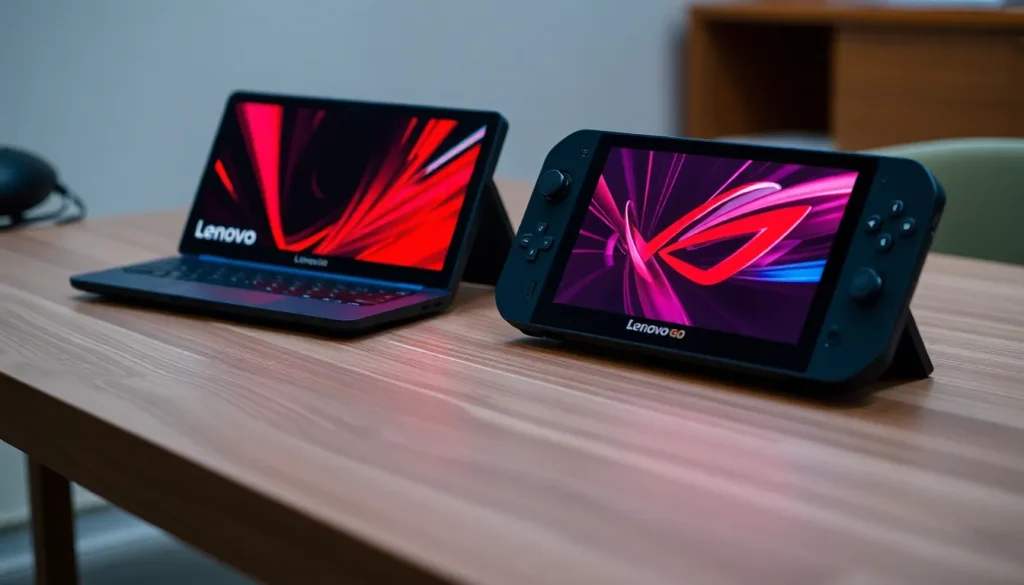

In the ever-evolving world of portable gaming, two titans are vying for supremacy: the Lenovo Legion Go and the ASUS ROG Ally. Picture this: a battle of the handhelds where every pixel counts, and gamers are armed with their favorite snacks. Who will reign supreme in this epic showdown?
Overview of Lenovo Legion Go and Asus ROG Ally
Lenovo Legion Go features a powerful AMD Ryzen Z1 Extreme processor designed for high-performance gaming. This portable device offers a 7-inch QHD display with a 120Hz refresh rate, ensuring smooth graphical output during intense gaming sessions. Battery life stands out, supplying up to 8 hours of continuous play on a single charge.
Asus ROG Ally also comes equipped with the AMD Ryzen Z1 Extreme chip, delivering comparable processing power. The device boasts a 7-inch FHD display, presenting sharp visuals. Users benefit from a refresh rate of 120Hz, promoting fluid movement in fast-paced games. Built-in cooling technology helps maintain performance during extended gameplay.
Storage capacity plays a significant role in user experience. Lenovo Legion Go offers up to 512GB of SSD storage, providing ample space for game libraries and applications. In contrast, Asus ROG Ally features a 512GB SSD with expandable storage options, accommodating gaming enthusiasts’ needs.
Controls and ergonomics are essential for handheld devices. Lenovo emphasizes comfort in its controller design, allowing for long-duration play without discomfort. ROG Ally incorporates customizable buttons and responsive triggers that enhance gameplay interaction.
Pricing varies slightly, with Lenovo Legion Go positioned as a premium option. Asus ROG Ally tends to be more budget-friendly, appealing to gamers seeking value without compromising performance. Both devices target serious gamers, providing excellent portability with high-quality displays and responsive controls.
Design and Build Quality
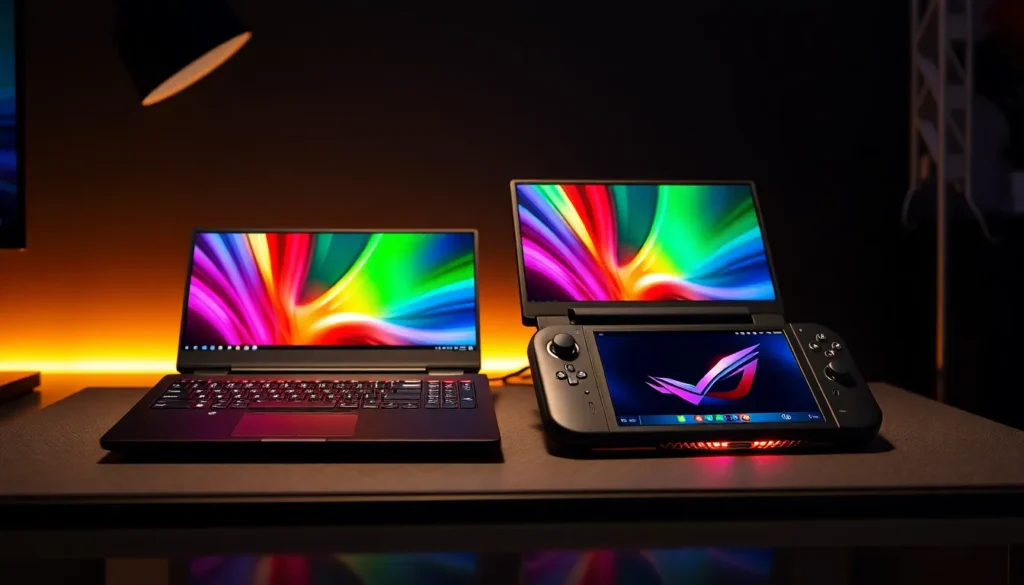
The design and build quality of both devices play a crucial role in user experience. Each handheld offers unique features appealing to gamers.
Lenovo Legion Go Design Features
Lenovo Legion Go showcases a robust and ergonomic design. Its controller layout emphasizes comfort, allowing for extended gaming sessions without fatigue. A sleek, modern aesthetic enhances the overall look, making it visually appealing. Additionally, the build quality incorporates durable materials, ensuring longevity during transport or gameplay. The 7-inch QHD display wrapped in thin bezels maximizes screen real estate while providing an immersive experience. Customizable RGB lighting adds a personalized touch that gamers appreciate.
Asus ROG Ally Design Features
Asus ROG Ally stands out with its lightweight and portable form factor. Its minimalist design provides a sleek and modern appeal, attracting gamers seeking a compact device. Customizable buttons enhance user experience, allowing tailored gameplay preferences. Responsive triggers contribute to precision in gaming while adding tactile feedback during intense action. The FHD display’s vibrant colors and clarity ensure captivating visuals across various gaming genres. Moreover, the use of high-quality materials ensures durability and comfort during prolonged use.
Performance Comparison
Performance serves as a crucial differentiator between the Lenovo Legion Go and the ASUS ROG Ally. Key aspects include processing power, graphics performance, and thermal management.
Processor and Graphics Performance
Both devices feature the AMD Ryzen Z1 Extreme processor, delivering substantial processing power. The Lenovo Legion Go’s 7-inch QHD display offers higher resolution compared to the ASUS ROG Ally’s FHD screen. Gamers appreciate the Legion Go’s ability to enhance visuals, providing sharper images for an immersive experience. Graphics performance stays consistent across both, with 120Hz refresh rates ensuring smooth gameplay. While similar in processing capabilities, the higher resolution of the Legion Go gives it an edge in demanding titles, allowing for more detailed gaming.
Cooling Solutions and Thermal Management
Cooling solutions play a significant role in sustained gaming performance. The ASUS ROG Ally incorporates advanced cooling technology that manages heat efficiently during extended gaming sessions. This design prevents throttling, ensuring peak performance remains stable over time. In contrast, the Lenovo Legion Go employs a solid thermal management system that also keeps temperatures in check without sacrificing portability. Gamers identify the effectiveness of both cooling systems as essential for maintaining optimal performance during long play hours. Overall, high-quality thermal management contributes to gameplay comfort across both devices.
Display and Audio Quality
The Lenovo Legion Go and ASUS ROG Ally each offer unique display features that enhance the gaming experience.
Lenovo Legion Go Display Specs
The Lenovo Legion Go boasts a 7-inch QHD display with a resolution of 2560 x 1600 pixels. This higher resolution contributes to sharper image quality, making games look more vibrant and immersive. A refresh rate of 120Hz ensures smoother motion, providing an advantage during fast-paced gameplay. Brightness levels reach up to 500 nits, allowing for visibility even in well-lit environments. Additionally, it supports a wide color gamut, resulting in rich and accurate color reproduction. Audio quality is further enhanced by dual front-facing speakers, delivering powerful sound that complements the visual experience.
Asus ROG Ally Display Specs
The ASUS ROG Ally features a 7-inch FHD display with a resolution of 1920 x 1080 pixels. This display still offers an impressive image quality suitable for most gaming experiences. A refresh rate of 120Hz allows for seamless graphics, minimizing motion blur during action sequences. Brightness levels also reach around 500 nits, ensuring gameplay remains enjoyable in various lighting conditions. The screen achieves vibrant colors through its excellent color accuracy. Audio capabilities benefit from Dolby Atmos support, providing immersive surround sound that enhances gaming enjoyment.
Battery Life and Portability
Battery life and portability significantly impact the usability of handheld gaming devices. Users often prioritize these features when choosing between the Lenovo Legion Go and ASUS ROG Ally.
Comparison of Battery Life
The Lenovo Legion Go offers a remarkable battery life of up to 8 hours on a single charge. It enables extended gaming sessions without frequent interruptions. In contrast, the ASUS ROG Ally’s battery life remains competitive but slightly shorter. While specific figures aren’t always disclosed, users can expect less than 8 hours in typical usage scenarios. These differences in battery capacity can influence how gamers experience gameplay during longer outings.
Weight and Portability Considerations
Portability remains a key distinction between these two devices. Weighing approximately 1.5 pounds, the ASUS ROG Ally presents a lightweight option, making it easy to carry around. In comparison, the Lenovo Legion Go, while slightly heavier due to its robust design, still ensures manageable portability. Gamers might find that both devices fit comfortably in a backpack, yet the ASUS ROG Ally may offer a slight edge in terms of ease of transport. Ultimately, portability affects user experience, especially for those who favor gaming on the go.
Price and Value
Pricing for the Lenovo Legion Go positions it as a premium gaming device, catering to serious gamers who prioritize high performance and advanced features. The cost reflects its QHD display and robust build quality. In contrast, the ASUS ROG Ally provides a more budget-friendly option, appealing to those seeking a mix of performance and affordability.
The Lenovo Legion Go typically retails around $699, showcasing features that support serious gaming experiences. Gamers receive excellent performance in demanding titles due to its superior resolution and ergonomic design. Comparatively, the ASUS ROG Ally starts at approximately $599, targeting users who want solid performance at a lower price point.
Value for both devices extends beyond initial costs. The Legion Go justifies its price with enhanced display quality and advanced cooling systems that maintain performance during extended gameplay. Users benefit from its longer battery life and premium materials.
Affordability and accessibility play significant roles in the ASUS ROG Ally’s appeal. Although slightly less powerful than the Legion Go, it still effectively handles most gaming experiences with its FHD display and impressive audio capabilities. Customizable features provide additional value, allowing gamers to personalize their setup without overspending.
Ultimately, the decision between the two devices hinges on budget and performance expectations. Serious gamers might prefer the Lenovo Legion Go for its high-end features, while casual players could find the ASUS ROG Ally meets their gaming needs without the steep price.
Choosing between the Lenovo Legion Go and ASUS ROG Ally ultimately comes down to individual gaming needs and budget. The Legion Go excels with its superior display quality and robust build, making it ideal for dedicated gamers seeking high performance. Its ergonomic design and impressive battery life further enhance the gaming experience.
On the other hand, the ROG Ally stands out as a more affordable option without sacrificing essential features. Its lightweight design and customizable controls cater to casual gamers looking for a solid performance at a lower price point. Each device offers unique advantages, ensuring that gamers can find the right fit for their portable gaming adventures.